
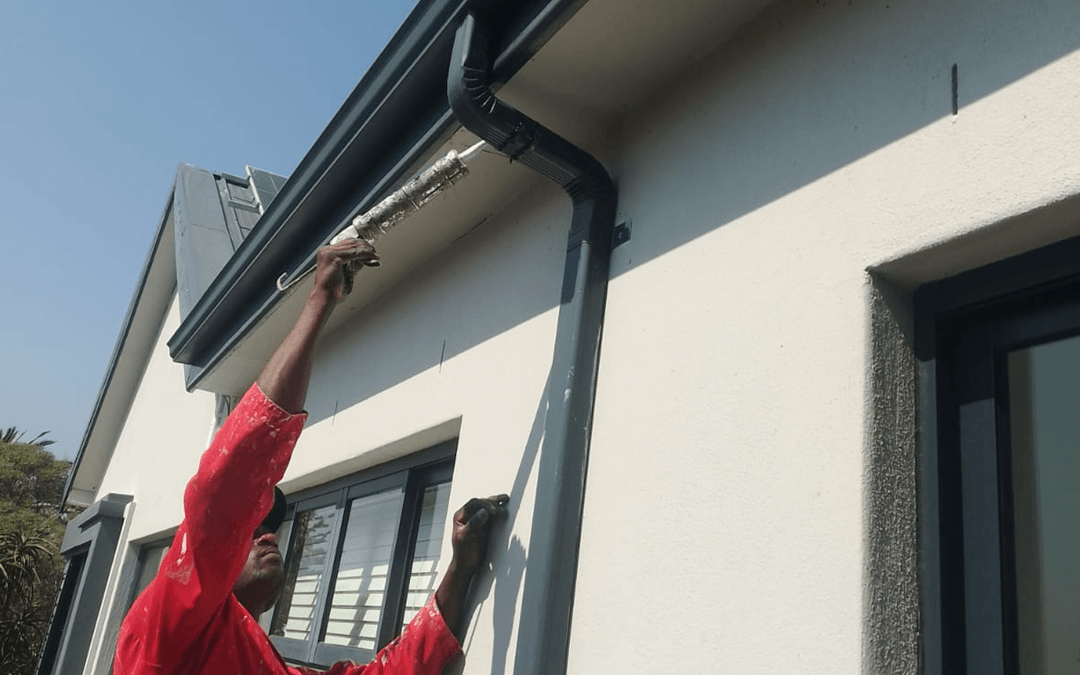
Most homeowners do not spend much time thinking about their gutters.
They sit above the normal line of sight, quietly doing their job for months at a time. Then something happens. Water starts pouring over one section during heavy rain. A downpipe stops draining properly. Plants begin growing from the gutter. A joint starts dripping. A section appears to sag.
That is usually the moment the gutter system becomes visible.
And because the symptom is often obvious, the explanation can seem obvious too.
The gutter is overflowing, so it must be blocked. The joint is leaking, so the gutters must need replacing. There are leaves in the channel, so cleaning them should solve the problem.
Sometimes those conclusions are correct.
But one of the patterns we repeatedly encounter when inspecting gutter systems is that the problem a homeowner can see is not always the problem the system actually has.
An overflowing gutter can be caused by debris, but it can also be caused by a restricted outlet, a blocked downpipe, poor alignment, a section that is holding water, or a combination of several smaller issues. A leaking section does not necessarily mean that the entire gutter system has reached the end of its life. And a gutter that looks relatively clean from the ground can still have a problem elsewhere in the system.
The reason is simple.
A gutter is not an isolated strip of material attached to the edge of a roof, it is one part of a connected rainwater-management system and understanding that changes the way we look at gutter problems completely.
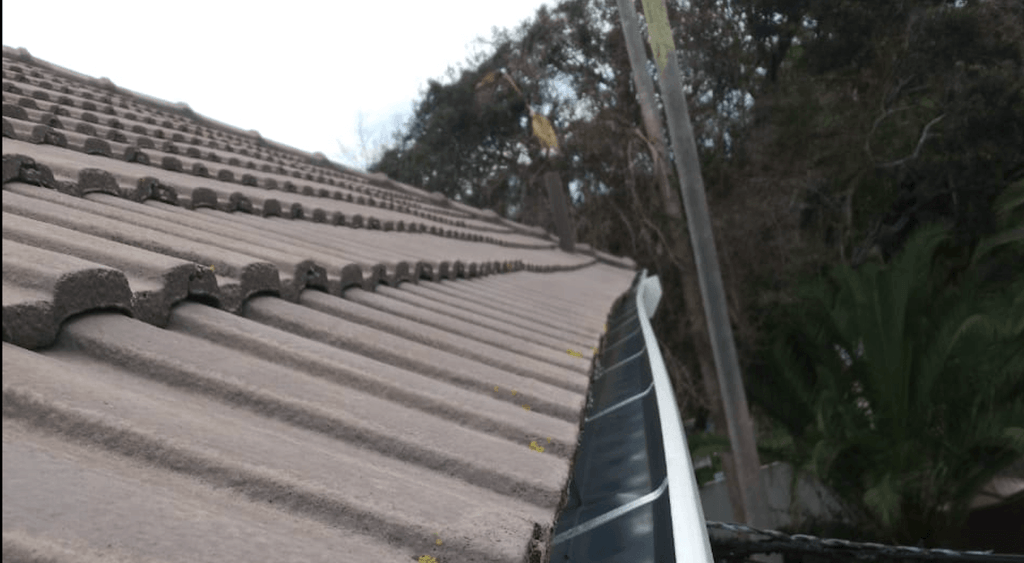
Your Gutter Is Only One Part of the System
The easiest way to understand a gutter system is to follow the water.
Rain falls onto the roof. The roof collects that water across a relatively large surface area and directs it towards the edges, valleys and gutter lines. The gutter receives the water and carries it “horizontally” towards an outlet. The outlet feeds the water into a downpipe. The downpipe moves it towards ground level, where it must finally discharge somewhere appropriate.
We think of this sequence as the Rainwater Path: Roof → Gutter → Outlet → Downpipe → Discharge
Each part depends on the next.
A perfectly clear gutter cannot perform properly if the outlet feeding the downpipe is restricted. A functioning downpipe is of limited use if the gutter itself is sagging and holding water away from the outlet. And getting water successfully to the bottom of the downpipe does not solve much if the water is then discharged somewhere it should not be.
The gutter channel is therefore only one component in a much larger process.
This is why looking at one visible symptom can often be misleading.
If water is spilling over the gutter, the natural assumption is that something is blocking the channel. But what the homeowner is actually seeing is simply the point at which the system has stopped moving water as intended.
The cause may be there.
Or it may be somewhere else along the Rainwater Path.
What We Actually Look At During a Full Gutter Inspection
When we assess a gutter system, we are not simply asking whether there are leaves inside it.
The more useful question is: Can water enter the system, travel through it and leave it where it is supposed to?
That means looking at the system as a whole.
The gutter channel itself is obviously part of that inspection. We look for accumulated leaves, organic material, sediment, standing water, deterioration, visible damage and anything else that might interfere with normal flow.
But we also look at how the gutter is sitting.
Water needs to travel towards the intended outlets. If part of a gutter has sagged or is no longer aligned correctly, water may collect in places where it was never intended to remain. The channel could be completely clean and still not drain as it should.
Supports and brackets matter for the same reason. A gutter can slowly move out of position long before the problem looks dramatic from the ground.
Joints and connections require attention too. A localised problem at one joint does not necessarily mean that the entire system needs replacing, just as a sound-looking section of gutter does not tell us what is happening inside the outlet or downpipe connected to it.
Then there are the outlets themselves.
The gutter may collect water across a long section of roofline, but all of that water eventually has to pass through a relatively small opening before entering the downpipe. An outlet that becomes restricted can therefore affect a much larger section of the system.
The same applies to downpipes.
Most of the downpipe is visible from outside, but what is happening inside it is not. A restriction may develop near the top, around a bend, at a connection or further down the pipe. From the ground, the homeowner may simply see the result: water backing up somewhere above.
Finally, we look at where the water goes after it leaves the downpipe.
The Rainwater Path does not end at the bottom of the wall.
A gutter system is ultimately there to move water away from places where it can cause problems. That means discharge is part of the system too.
The Problems We Keep Finding
No two properties are exactly the same. Roof shape, surrounding vegetation, materials, maintenance history and weather exposure all change how a gutter system behaves.
But certain types of problems appear repeatedly.
Debris Accumulation
This is the problem most people associate with gutters, and for good reason.
Leaves, twigs, seed pods, roof sediment and other organic material gradually collect inside gutter channels. If enough material accumulates, it reduces the amount of space available for water to move and can begin concentrating around outlets.
The important distinction is that a dirty gutter is not automatically a failed gutter.
A small amount of debris in a wide, correctly functioning channel may have very little effect on performance. The concern begins when accumulated material starts affecting how water moves through the system.
That is why the objective of gutter cleaning is not simply to make the gutter look clean.
It is to restore and protect flow.
Restricted Outlets
The outlet is easy to overlook because it occupies such a small part of the system but it can have an outsized effect.
Imagine a long section of gutter collecting water from a substantial portion of roof. All of that water eventually needs to pass through the outlet feeding the downpipe. If leaves and sediment begin collecting around that point, water can back up even though large portions of the gutter channel remain relatively clear.
From the homeowner’s perspective, the problem may appear to be: “My gutter keeps overflowing here.”
The more useful question is: “What is preventing water from leaving the gutter at the rate it is arriving?”
Sometimes the answer is sitting directly at the outlet.
Blocked or Restricted Downpipes
A gutter channel can be completely cleaned and still fail to perform properly if the downpipe below it is restricted.
This is one of the clearest examples of why the system needs to be considered as a whole.
Water leaves the gutter through the outlet and enters the downpipe. If it encounters a restriction inside the pipe, flow begins to slow. During sufficiently heavy rainfall, water can then back up towards the gutter and eventually overflow.
The visible symptom appears at roof level but the underlying problem may be further down the Rainwater Path.
That is also why simply removing debris from the gutter channel does not always resolve an overflow problem.
The downpipe itself may need attention.
Standing Water
One of the less obvious issues in a gutter system is water remaining inside the channel after rainfall.
A homeowner looking from ground level may never see it.
Persistent standing water can indicate that the gutter is not draining as intended. That may be because part of the channel has moved out of alignment, because a section has deformed, because the fall is inadequate, or because a local restriction is preventing water from reaching the outlet efficiently.
The presence of standing water does not tell us the cause by itself.
But it tells us that the system deserves a closer look.
Sagging and Poor Alignment
Gutters need to maintain the correct geometry to move water effectively.
If brackets loosen, sections begin pulling away or the gutter gradually sags, water may start collecting in the lowest point rather than travelling towards the outlet.
This can create strange symptoms.
Overflow may occur nowhere near the downpipe. One section may remain full of water while another appears completely normal. During dry weather, the problem may be almost invisible from below.
Again, the gutter can be perfectly clean and still not work correctly.
Joint and Connection Problems
Gutter systems are made up of connected components, and those connections can sometimes become the weak point.
A joint may begin allowing water through while the surrounding gutter remains in reasonable condition. Connections between gutters, outlets and downpipes can also deteriorate or move.
This is where diagnosis matters.
A localised connection problem does not automatically justify replacing an otherwise serviceable system.
Sometimes the correct intervention is much smaller.
Corrosion and Material Deterioration
Gutter materials age differently depending on what they are made from, how they were installed and the environment in which they operate.
Corrosion, cracking, surface deterioration and other signs of ageing therefore need context.
Not every ageing gutter needs immediate replacement. At the same time, repeatedly repairing a system that has deteriorated across multiple sections may eventually stop making economic sense.
The important distinction is between a localised defect and a system-wide condition.
Poor Discharge
Homeowners understandably pay most attention to what happens at roof level.
But the purpose of the gutter system is not simply to get water off the roof.
It is to move that water somewhere suitable.
A downpipe that empties directly into an inappropriate area can create a different water-management problem at ground level. Connections may also become displaced or damaged over time.
This is why our inspection of the Rainwater Path does not stop at the downpipe.
We want to understand where the water is actually going.
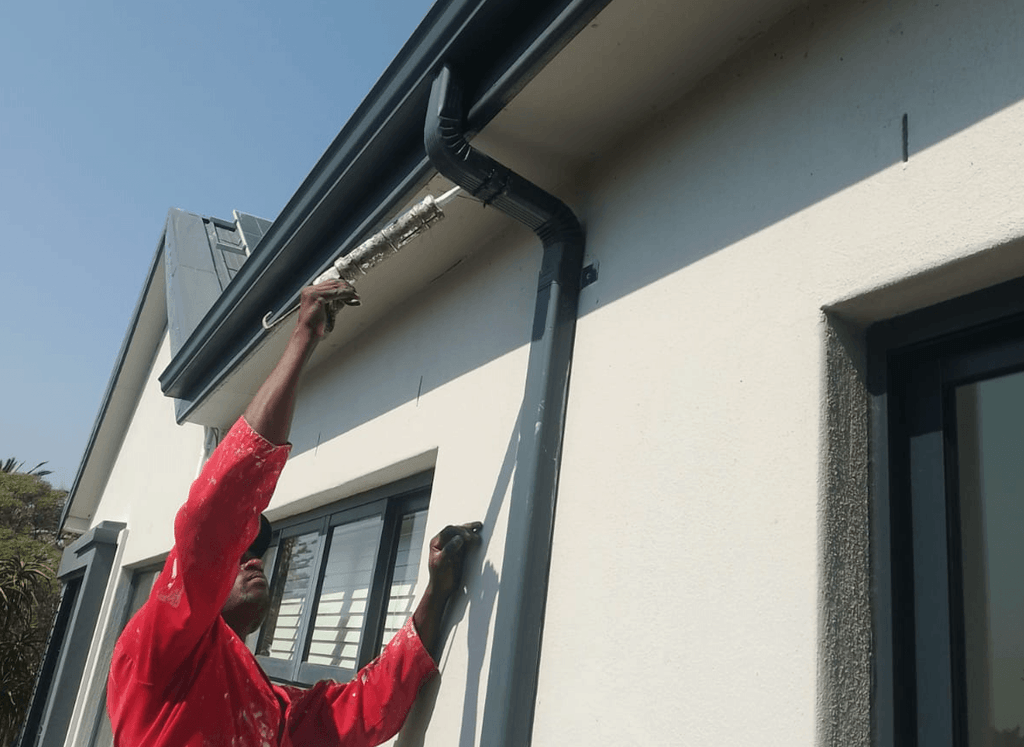
The Problem You See Is Not Always the Problem You Have
The difference between a visible symptom and an underlying cause becomes much clearer when you look at real scenarios.
Consider a homeowner who calls because the gutter keeps overflowing during rain, the obvious conclusion is that the gutter is blocked but an inspection might indeed reveal a heavily blocked channel. It might also reveal that the gutter itself is relatively clear and that debris has accumulated around the outlet. Or the outlet may be open while the downpipe below it is restricted. Or water may be collecting because one section of the gutter has sagged.
From the ground, each of those situations can look very similar, the required intervention is not.
Now consider a homeowner who believes the entire gutter needs replacing because water is escaping from one section.
An inspection may reveal extensive deterioration and confirm that replacement should be considered.
But it may instead reveal a localised joint problem while the majority of the system remains serviceable.
The reverse can also happen.
A homeowner might call expecting nothing more than a routine clean because there are visible leaves in the gutter. Cleaning may certainly be required, but once the system is inspected, additional issues such as sagging, damaged components or a restricted downpipe may become apparent.
And sometimes the inspection reveals nothing particularly complicated at all.
The gutter system is in reasonable condition. Debris has accumulated. The correct intervention is simply to clean it properly and restore normal flow.
That scenario matters.
An assessment should not exist to discover the maximum amount of work possible.
Its purpose is to understand what the property actually needs.
Sometimes that is a larger intervention.
Sometimes it is one small repair.
Sometimes it is ordinary maintenance.
Why Some Gutter Problems Are Difficult to See
There is nothing unusual about a homeowner not knowing exactly what is wrong with a gutter system.
Most of the system sits outside the way we normally experience a property.
Gutters are above eye level. The inside of a downpipe is hidden. Roof geometry is difficult to understand from the ground. Problems often develop gradually rather than appearing overnight.
And the system behaves differently when it is carrying water.
A gutter that looks perfectly normal on a sunny afternoon might reveal overflow during heavy rain. A downpipe that appears intact externally may contain an internal restriction. A section that appears level from below may be holding water.
Symptoms can also appear away from their causes.
Water overflowing at one point does not automatically mean that the obstruction is sitting directly beneath it. The system may be backing up because water cannot move somewhere further along the Rainwater Path.
Multiple problems can exist at the same time too.
A gutter can contain debris and have poor alignment. A downpipe can be partially restricted while a joint is also deteriorating. Cleaning one component may improve performance without addressing everything affecting the system.
This is why a homeowner can often recognise that something is not right without being able to identify exactly what is causing it.
That is a perfectly reasonable place to start.
What You Can Check Yourself From the Ground
You do not need to understand every part of your gutter system to notice that something deserves attention.
There are several useful observations homeowners can make safely from ground level.
Start by looking along the gutter line.
Does any section appear to sag? Is anything pulling away from the fascia? Are there obvious breaks or disconnected pieces?
Look for visible vegetation or debris. Plants growing from a gutter are a fairly clear sign that organic material has been sitting there for some time.
Check your downpipes.
Are they properly connected? Is anything visibly damaged or displaced? Where does each downpipe discharge?
One of the most useful things you can do is observe the system during rainfall, provided you can do so safely from the ground.
Watch where water moves.
Does it remain inside the gutter?
Does it overflow at one particular point?
Are the downpipes visibly discharging water?
Does water appear somewhere you were not expecting?
You can also take photographs or short videos of anything unusual. A symptom captured while it is occurring can be far more useful than trying to describe it several days later.
What we would not recommend is turning a simple inspection into unnecessary risk.
Working at height introduces a completely different safety consideration. There is a meaningful difference between observing your gutters from the ground and climbing onto a roof or unstable ladder to investigate something you cannot safely reach.
You do not need to put yourself at risk simply to determine whether the system deserves closer inspection.
Sometimes the Answer Really Is Just Cleaning
There is a tendency in home maintenance to make every problem sound more complicated than it is.
Gutters are no exception.
Sometimes the system is fundamentally sound.
The channels have accumulated leaves and debris. The outlets and downpipes are otherwise functioning. The supports are doing their job. There is no meaningful damage requiring repair.
In that situation, the appropriate intervention may simply be a proper gutter clean.
That is not a lesser outcome.
It is the correct one.
The point of inspecting the system is not to turn routine maintenance into a repair project. It is to make sure the work being recommended actually matches the condition of the property.
If cleaning is enough, cleaning is enough.
And Sometimes Cleaning Will Not Solve the Problem
The opposite is also true.
Cleaning removes debris.
It does not repair damaged joints, correct sagging, restore deteriorated sections or automatically resolve every restriction inside a downpipe.
This distinction matters because gutter cleaning and gutter repair solve different problems.
A homeowner can spend money having a gutter cleaned and still experience the same symptom afterwards if the underlying issue was never caused by debris in the first place.
Likewise, it would make little sense to repair an isolated component while ignoring a heavily obstructed system that cannot move water properly.
The correct solution may be cleaning.
It may be repair.
It may occasionally be replacement.
Or it may involve more than one of those.
The first job is determining which problem actually exists.
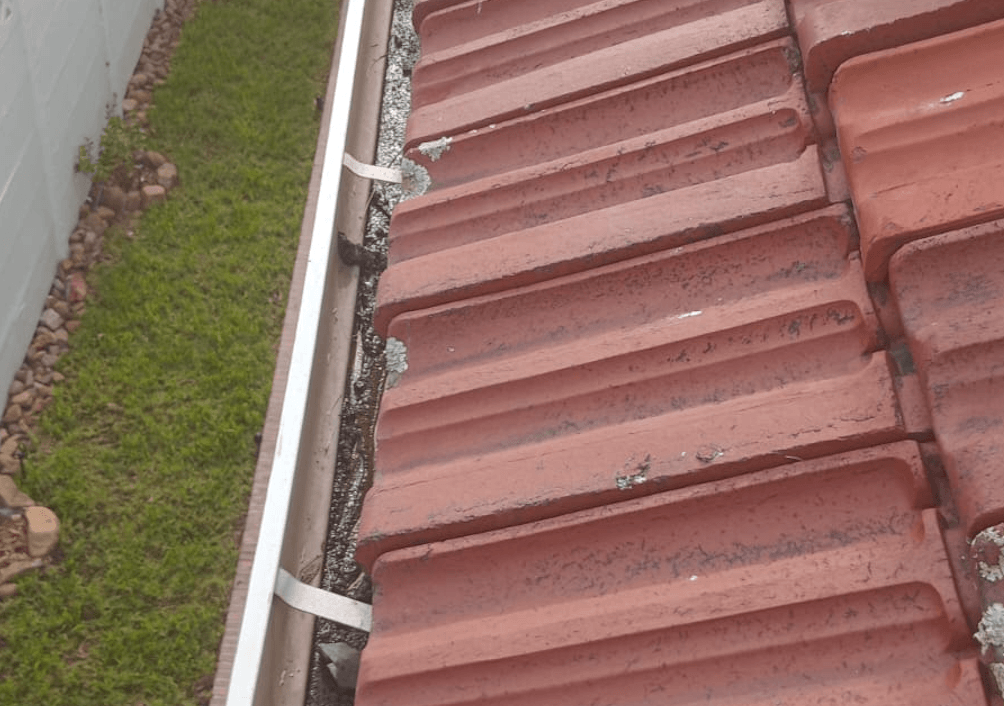
How Often Should You Think About Your Gutters?
One of the most common questions in gutter maintenance is how often gutters should be cleaned.
It is tempting to give every homeowner a simple answer.
Once a year.
Twice a year.
Every six months.
The problem is that properties are different.
A house surrounded by mature trees can accumulate debris very differently from a property with little vegetation nearby. Roof shape matters. Wind exposure matters. Previous blockage history matters. Local weather patterns matter.
Even two homes on the same street can have different maintenance requirements.
That means the more useful question is not:
“How often should everyone clean their gutters?”
It is: “How often does this property need attention?”
The answer becomes clearer once you understand how quickly debris accumulates, how the system performs during rain and whether the property has a history of recurring problems.
Over time, a sensible maintenance rhythm can be built around the house itself rather than an arbitrary calendar.
A Better Way to Think About Gutter Maintenance
The traditional way of thinking about gutters is very simple:
The gutters look dirty → clean them.
That is sometimes perfectly adequate.
But a better way to think about the system is:
Observe → Inspect → Diagnose → Act → Monitor
Observe what the system is doing.
Inspect the relevant components.
Identify the actual cause of the problem.
Choose the appropriate intervention.
Then monitor how the system performs afterwards.
That process might lead to nothing more than routine cleaning.
It might uncover a localised repair.
It might show that the system requires closer attention over time.
What matters is that the decision follows the condition of the property rather than an assumption made from one visible symptom.
What We Are Learning From South African Homes
As GutterFix continues inspecting properties, we are increasingly interested not only in the condition of gutter systems themselves but in the difference between what homeowners initially report and what is actually found during inspection.
That distinction is useful.
Homeowners tend to encounter gutter problems through symptoms: overflow, visible debris, dripping water, sagging, disconnection or poor drainage.
An inspection allows us to look one level deeper.
Was the homeowner’s initial diagnosis correct?
Was there another issue elsewhere in the Rainwater Path?
Was the visible problem only one part of what was happening?
Did the property require less work than expected?
Was cleaning sufficient, or was a repair also necessary?
Those observations are now becoming part of how we think about gutter maintenance more broadly.
As our assessment data grows, we will be able to examine recurring issues, which problems homeowners tend to identify correctly, which problems are more often discovered during inspection, how surrounding property conditions influence maintenance requirements, and how different systems behave over time.
The purpose is not to turn ordinary homes into research laboratories.
It is to get better at answering a simple question: What does this property actually need?
That is ultimately far more useful than applying the same answer to every gutter system.The Real Question Is Not “Are My Gutters Dirty?”
If there is one idea worth taking away from all of this, it is that gutter maintenance is really about water movement.
The question is not simply whether the gutter looks clean.
It is:
Is the system successfully moving rainwater from the roof, through the gutter and downpipe, to the place it is intended to go?
A gutter containing some debris may still be functioning.
A gutter that looks clean from the ground may still have a problem somewhere else.
An overflowing section may require cleaning.
Or it may not.
A small visible defect may be genuinely localised.
Or it may be one symptom of a larger problem.
You do not need to know the answer before asking for help.
That is what the inspection is for.
Start With the System
If you have noticed overflowing water, accumulated debris, a disconnected downpipe, sagging, unusual water movement or anything else that does not look right, you do not need to decide whether the answer is cleaning, repair or replacement before contacting us.
GutterFix can assess the gutter system, follow the Rainwater Path, show you what we find and explain what—if anything—needs attention.
Sometimes the answer will be a straightforward clean.
Sometimes there will be something else worth addressing.
Either way, the starting point is the same: understand the system before prescribing the solution.